7 Media Buying Platforms Compared for Scalable Customer Acquisition in 2026
Media buying platforms are not interchangeable checkout buttons for buying traffic. Each one gives you access to a different audience, auction, set of creative formats, measurement environment, and level of operational complexity. The right choice depends on whether your growth problem is demand creation, high-intent capture, marketplace sales, account-based reach, or simply turning an under-managed paid program into a reliable acquisition system.
This comparison is for growth-stage brands, ecommerce teams, and marketing leaders who need to decide where the next dollar of acquisition spend should go. It covers six self-serve advertising platforms and one managed alternative: Kimmel Marketing. The managed option is included because some companies are not choosing between two interfaces; they are choosing between operating media buying internally and hiring a partner to plan, execute, and optimize it.
The list uses five practical criteria:
- Audience and intent: Can the platform reach people already searching, browsing, watching, buying, or making business decisions?
- Measurement: How much first-party data, conversion tracking, attribution, and offline feedback can the advertiser supply?
- Creative fit: Does the buying environment reward product feeds, short video, search copy, professional content, or broader brand storytelling?
- Implementation burden: What must be configured before performance data becomes trustworthy?
- Commercial model: Is the cost primarily auction spend, a managed fee, or a combination of both?
There are two categories here. Native advertising platforms let your team purchase inventory directly through a platform account. Kimmel Marketing is a managed media buying service, which can operate across channels but does not replace the underlying ad accounts or auctions. Ranking them together would be misleading, so each section explains the job and the trade-off rather than pretending every option has the same product.
1. Google Ads
Best use case and audience access
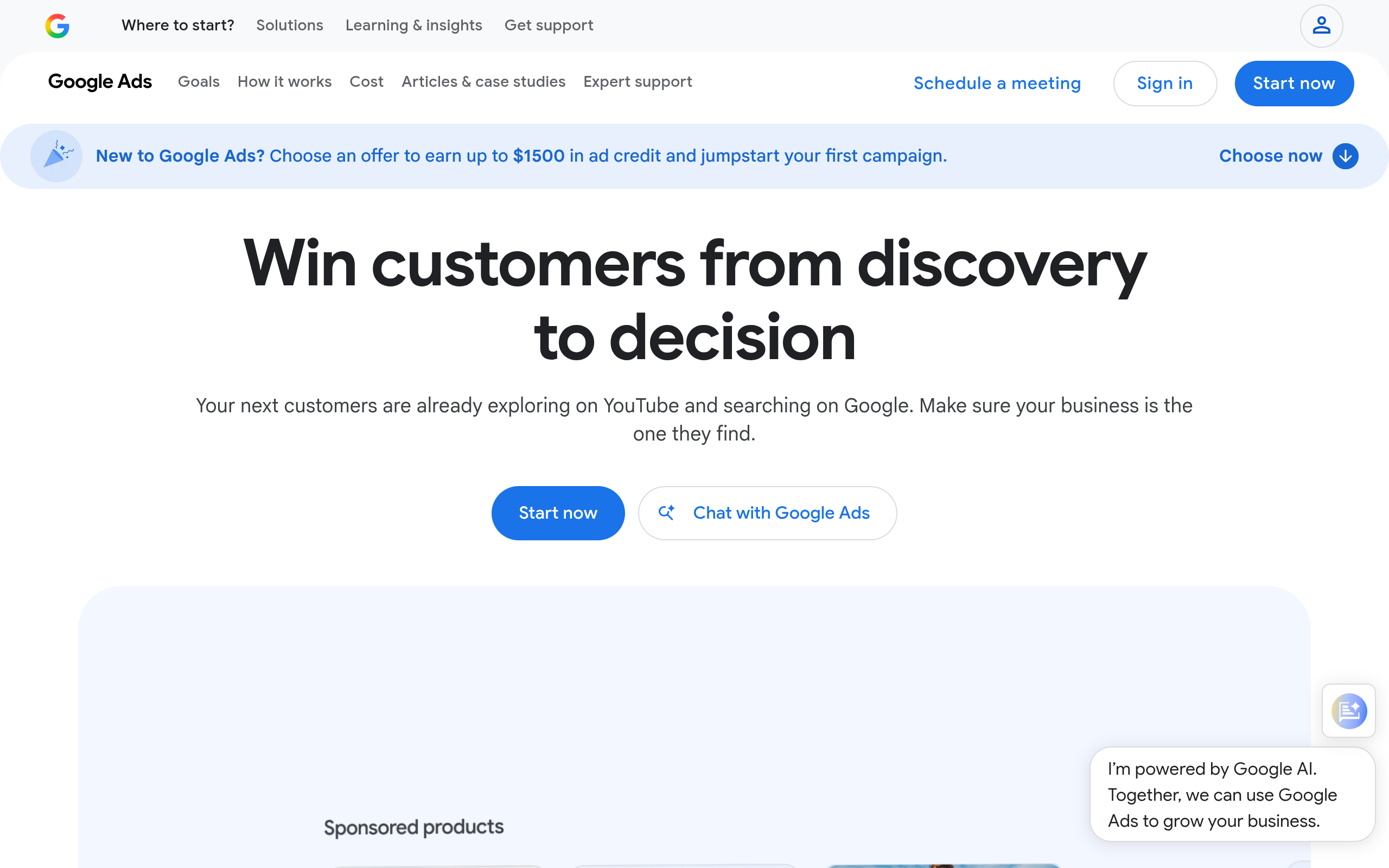
Google Ads is usually the strongest starting point when the business already has measurable demand. Search campaigns can meet people who express a problem or product need in a query, while Shopping and other campaign types can connect product information with commercial intent. Google’s official advertising site describes the platform’s core options and campaign environment at Google Ads.
That makes Google particularly useful for an ecommerce company with known product categories, a local or national service with valuable leads, or a brand that wants to defend branded demand while expanding into non-brand queries. It is less naturally suited to creating desire for a product nobody is searching for. A new category may need video, creator, or social distribution before search volume becomes meaningful.
Measurement, implementation, and commercial model
Implementation starts with conversion definitions, Google Tag or equivalent site instrumentation, consent and privacy review, feed quality where relevant, and a clean separation between primary conversions and diagnostic actions. If a lead business counts every form open as a sale, the bidding system can optimize toward activity that does not represent revenue. Google’s documentation explains how conversion tracking is used to measure actions from ads at Google Ads conversion tracking.
Google’s automated bidding can use conversion signals, but automation does not remove the need for economics. A retailer should pass back purchase value where possible; a lead generator should distinguish qualified opportunities from cheap, unqualified submissions. Google explains its Smart Bidding approach and conversion-based bidding in its official documentation at Smart Bidding.
- Best for: Capturing existing search demand, Shopping traffic, and high-intent lead generation.
- Does not suit: Teams without a clear conversion event, reliable landing pages, or enough demand to support the intended campaign.
- Standout: Strong alignment between a user’s expressed query and the advertiser’s offer.
- Implementation burden: Medium to high when feeds, enhanced measurement, offline conversion imports, and multiple campaign types are involved.
Commercial model: The advertiser generally pays through an auction-based media budget, with costs varying by query, audience, placement, and competition. Platform access and media spend should be separated in the forecast. Google Ads is not a good fit for a brand that wants a fully managed strategic function without internal ownership; in that case, a specialist partner may be needed around the account.
2. Meta Ads
Best use case and audience access
Meta Ads is built for reaching people while they consume social content rather than only when they declare a need through a search query. Its strength for ecommerce and consumer brands is the combination of visual creative, broad audience delivery, retargeting possibilities, and product-oriented campaign structures. The official Meta for Business advertising page provides the current overview of its advertising products.
For a direct-to-consumer brand, Meta can introduce a product through a demonstration, comparison, testimonial, or lifestyle concept. It can also bring back visitors who viewed products without purchasing, subject to available consent and signal quality. The creative requirement is substantial: an account can have correct settings and still struggle if the ads fail to explain the product in the first seconds or do not provide a credible reason to act.
Measurement, implementation, and commercial model
A serious setup typically includes the Meta Pixel, server-side or API-based event sharing where appropriate, a product catalog for dynamic product promotion, domain and event configuration, and a purchase or qualified-lead event that matches the business objective. Meta’s business documentation describes its Conversions API at Meta Conversions API. Capabilities and setup requirements should be checked against the account’s region, site stack, and privacy process.
Media is purchased through an auction, while creative production, feed management, landing-page work, and account management are separate costs. Broad targeting may reduce manual audience construction, but it increases the importance of strong creative variation and accurate conversion values. A brand that cannot produce new angles, offers, formats, or proof points may exhaust an audience faster than a brand with the same budget and a better creative system.
- Best for: Consumer products that can be demonstrated visually and benefit from discovery-led demand creation.
- Does not suit: B2B offers with tiny addressable audiences or products whose value cannot be communicated in the available ad experience.
- Standout: Creative-led prospecting paired with product and remarketing use cases.
- Implementation burden: Medium, rising to high when catalog, server-side events, consent, and multiple markets are involved.
Commercial model: Auction-based media spend is the platform charge in practice; creative, analytics, and management sit outside that spend. Meta is a poor fit for an organization expecting audience settings alone to compensate for weak positioning, slow mobile pages, or thin creative testing.
3. Microsoft Advertising

Best use case and audience access
Microsoft Advertising is a search-led platform that can extend coverage beyond Google’s ecosystem. It is relevant when a company wants another source of query-driven traffic, has a mature search structure it can adapt, or needs to reach audiences across Microsoft’s search properties and advertising network. The official product site is Microsoft Advertising.
The key decision is not whether every Google campaign should be copied automatically. It is whether the incremental reach produces profitable customers after differences in query mix, device behavior, audience composition, conversion rate, and management time. A smaller channel can still be valuable if it reaches a distinct pocket of demand, but duplicated low-volume campaigns can create reporting noise and operational overhead.
Measurement, implementation, and commercial model
Implementation includes importing or rebuilding campaigns, validating search terms and match behavior, installing the Universal Event Tracking tag, configuring goals, and connecting revenue or lead-quality information where possible. Microsoft documents Universal Event Tracking at Microsoft Learn. The specific account setup should be verified before migration because interfaces and available campaign features change.
Like other search platforms, Microsoft Advertising uses auction-based media buying. The labor cost is usually in campaign architecture, query controls, ad testing, feed or shopping maintenance, and reconciliation against the source of truth in analytics or CRM. For a lean team, the platform may be attractive only after the primary search account has a repeatable operating process.
- Best for: Search advertisers seeking incremental intent-based reach and an additional source of qualified queries.
- Does not suit: Teams that cannot maintain conversion tracking or that have not yet stabilized their core search economics.
- Standout: A second search environment that can be evaluated on incremental contribution rather than duplicated clicks.
- Implementation burden: Low to medium for a focused test; higher when campaign imports, feeds, and offline data are involved.
Commercial model: Auction-based advertising spend, plus internal or external management costs. Microsoft Advertising is not the right answer when the real bottleneck is poor offer-market fit; adding another search source will not fix a landing page that fails to qualify or convert traffic.
4. TikTok Ads Manager
Best use case and audience access
TikTok Ads Manager is a short-form-video-led buying environment. It can suit brands whose products are naturally shown through use, transformation, reaction, education, entertainment, or creator-style demonstration. The official platform is available through TikTok for Business.
The buyer job is demand creation and product discovery, not simply harvesting existing intent. That distinction changes the creative workflow. A polished brand film may be less useful than several native-feeling demonstrations that make the product’s benefit obvious quickly. The platform can be a poor choice for a company that has no credible video concept, no process for producing variations, or a product with a long explanation that cannot be compressed into a useful first impression.
Measurement, implementation, and commercial model
A responsible launch needs a defined event hierarchy, site or app tracking, catalog data for product campaigns where applicable, consent handling, and a process for reconciling platform-reported purchases with backend revenue. TikTok’s official business site and support resources should be checked for the current pixel and events setup before implementation; available options can depend on the site technology and market.
Media is purchased through an auction. The less established the creative operation, the more of the budget may effectively be spent learning which messages deserve iteration. That is not an argument against TikTok; it is a reason to separate a creative testing budget from a scale budget. An illustrative starting policy might require several distinct creative concepts before increasing spend, but that is a planning rule, not a universal performance benchmark.
- Best for: Consumer brands with demonstrable products and a repeatable short-form creative pipeline.
- Does not suit: Organizations unable to produce frequent creative variations or unwilling to evaluate assisted demand creation.
- Standout: The opportunity to make the ad itself feel like useful or entertaining content.
- Implementation burden: Medium for tracking; high operationally if creative production is immature.
Commercial model: Auction-based media spend, with separate costs for creators, production, editing, landing pages, and management. TikTok Ads Manager is a poor fit if success is judged only by last-click revenue while the platform is being used primarily to introduce a new product category.
5. LinkedIn Campaign Manager
Best use case and audience access
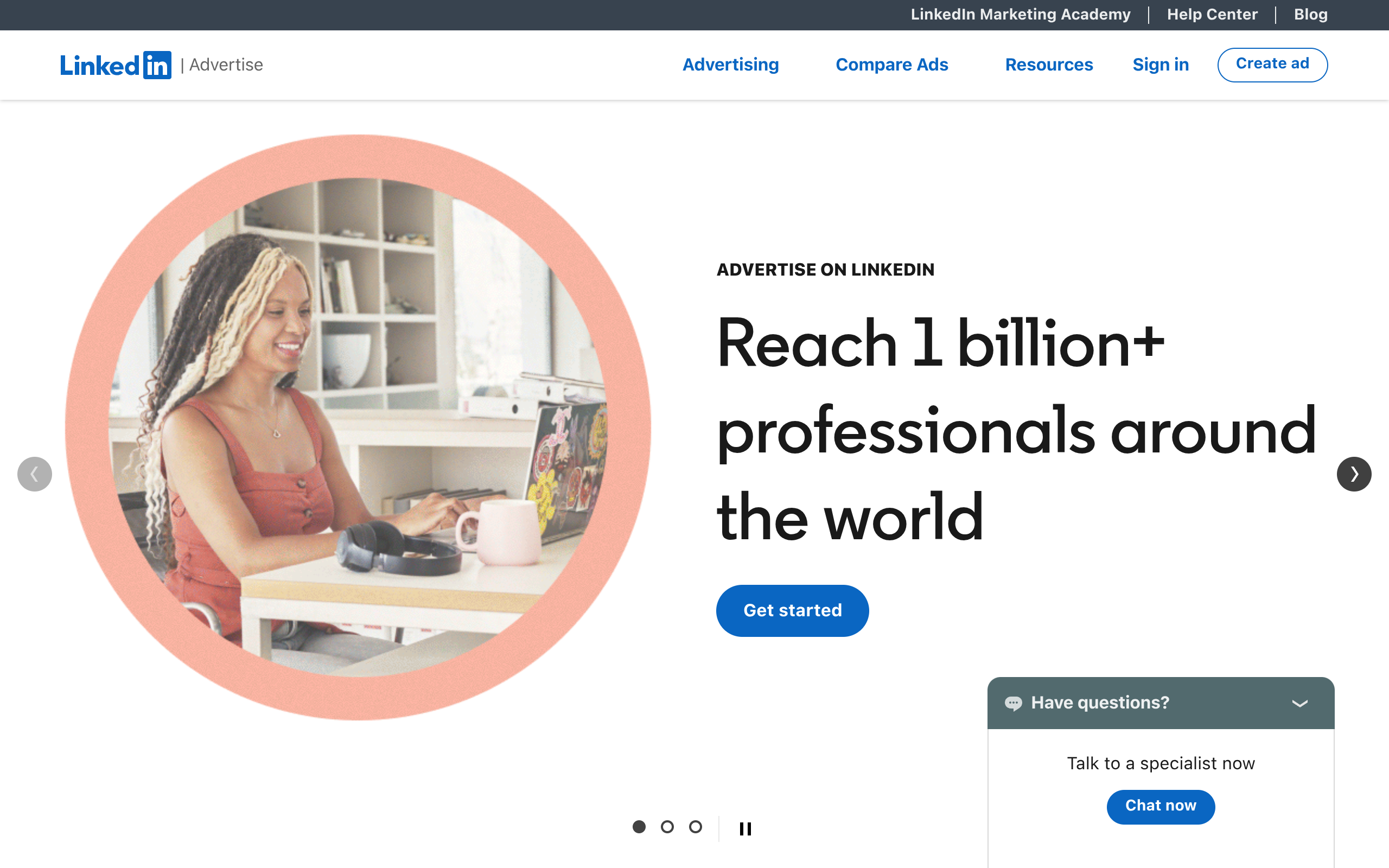
LinkedIn Campaign Manager is designed for professional-audience advertising. It is most relevant to B2B companies, recruitment offers, professional education, and account-based programs where job role, seniority, company, or industry context matters. The official product overview is available from LinkedIn Marketing Solutions.
LinkedIn should not be selected because a brand wants “premium” traffic in the abstract. The business case must survive the value of a qualified opportunity and the time between first touch and revenue. If a software company sells an annual contract and can connect campaign engagement to qualified pipeline, professional audience access may justify a higher acquisition cost than a low-price ecommerce product could tolerate.
Measurement, implementation, and commercial model
Implementation requires clear account and audience definitions, conversion tracking, landing pages written for the target role, and CRM discipline. For B2B, the most important feedback may occur after the form fill: accepted lead, sales-qualified opportunity, pipeline value, or closed revenue. Without that feedback loop, optimization can favor inexpensive submissions rather than commercially useful accounts.
Media is purchased through an auction, with the campaign objective, audience, placement, creative, and competition influencing delivery. LinkedIn also requires careful frequency and audience-size judgment: a narrow account list can be strategically valuable but operationally constrained. Teams should verify current targeting, matched-audience, and conversion features in their account before making a forecast.
- Best for: B2B demand generation, account-based marketing, and offers where professional context improves qualification.
- Does not suit: Low-margin consumer products or teams that cannot measure lead quality beyond a form submission.
- Standout: Professional audience context that can support role- and account-relevant messaging.
- Implementation burden: Medium to high because CRM feedback and sales alignment matter as much as the ad account.
Commercial model: Auction-based media spend plus creative, data, sales-alignment, and management costs. LinkedIn is not a substitute for a strong B2B offer. If the landing page does not explain the business case to a specific buying committee, precise audience targeting will only make the mismatch more expensive.
6. Amazon Ads
Best use case and audience access
Amazon Ads is the most specialized option in this list: it is primarily useful when the commercial objective includes discovery and sales within Amazon’s retail environment. It can be a logical platform for brands with active product listings, retail availability, sufficient inventory, and a willingness to manage marketplace economics alongside advertising.
The buyer job is not simply “send ecommerce traffic.” It is to improve product visibility and conversion where shoppers can compare products, read reviews, assess delivery, and purchase. That makes listing quality, availability, price, reviews, contribution margin, and advertising inseparable. A brand with an incomplete listing or unreliable stock should fix those constraints before treating more sponsored exposure as the answer.
Measurement, implementation, and commercial model
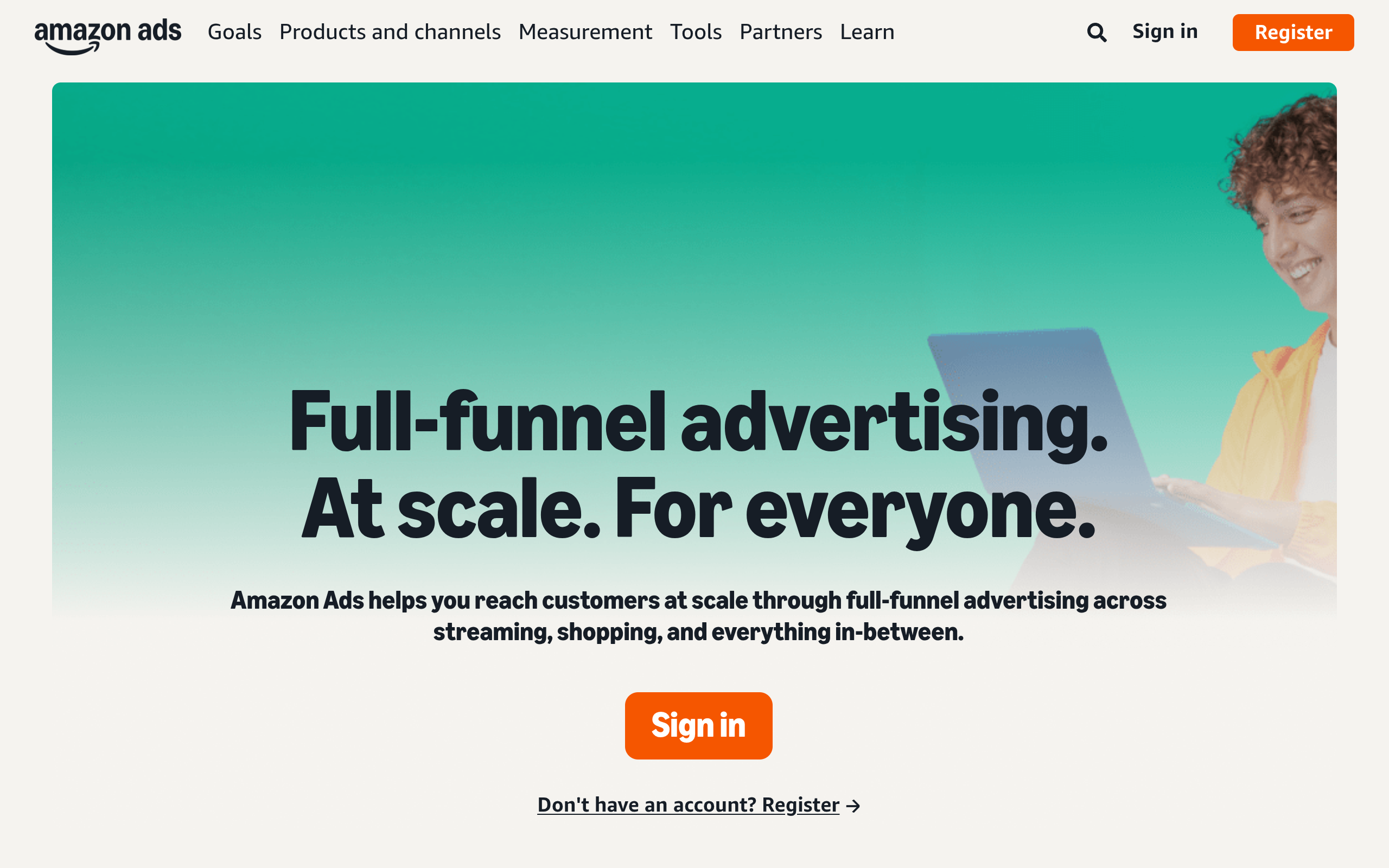
Implementation depends on the seller or vendor setup, product detail pages, catalog structure, retail readiness, and campaign organization. Amazon’s official advertising site is Amazon Ads; advertisers should verify the current product, reporting, and eligibility requirements for their marketplace before planning a rollout.
Costs are generally tied to auction-based advertising placements, while the broader commercial picture includes marketplace fees, fulfillment, discounts, returns, and inventory carrying costs. A useful measurement model separates advertising-attributed sales from total contribution margin. A campaign can appear efficient on attributed revenue and still be unattractive after discounts, fulfillment, returns, and the cost of inventory.
- Best for: Brands already selling on Amazon with retail-ready listings and enough margin to support sponsored visibility.
- Does not suit: Companies without marketplace distribution, stable inventory, or control over product detail pages.
- Standout: Advertising close to a retail purchase environment rather than a separate discovery journey.
- Implementation burden: Medium, but operational complexity rises with catalogs, marketplaces, inventory, and retail reporting.
Commercial model: Auction-based ad spend alongside the wider economics of selling through a marketplace. Amazon Ads is a poor fit when the business wants to own the entire customer relationship or when marketplace sales would undercut its margin and channel strategy.
7. Kimmel Marketing
Best use case and operating model
Kimmel Marketing is the managed alternative in this comparison, not another auction. It helps brands connect digital marketing services such as brand strategy, creative development, media buying, and performance optimization into a growth program. The relevant buyer job is reducing the operational gap between strategy, creative, channel execution, measurement, and revenue decisions.
This can suit a growth-stage ecommerce company that has several channels but no consistent testing process, a founder-led business moving from intuition to accountable acquisition, or a marketing leader who needs additional execution capacity without hiring every specialist internally. The work should still be judged against business outcomes such as customer acquisition cost, contribution margin, qualified pipeline, retention, and lifetime value—not platform-reported clicks alone.
Implementation, commercial model, and limitations
Implementation begins with access to existing accounts and analytics, an audit of tracking and economics, agreement on primary goals, channel roles, creative responsibilities, reporting cadence, and decision rights. The burden is not zero: the client must provide product, margin, customer, CRM, inventory, and approval information. A partner cannot repair missing business data by changing campaign settings.
The commercial model is a service engagement rather than media auction access. Fees, scope, and media budgets should be agreed directly and verified in the current proposal; there is no responsible reason to assume a universal percentage, minimum, or performance guarantee. Kimmel’s broader marketing expertise is relevant when paid media needs to be connected to positioning and creative rather than managed as an isolated traffic source.
- Best for: Teams that need integrated strategy, creative, media buying, and performance accountability.
- Does not suit: Large in-house teams that already have channel specialists, strong measurement, and sufficient creative and analytics capacity.
- Standout: A cross-functional operating layer around the underlying advertising platforms.
- Implementation burden: Medium during onboarding, then dependent on client approvals, data access, creative supply, and reporting discipline.
Commercial model: A separately scoped service fee plus the client’s media and production costs. Kimmel Marketing is not the right fit for a company seeking a free platform, a self-serve dashboard, or a guaranteed outcome independent of offer, site, creative, data, and market conditions. Verify current capabilities, scope, and pricing before engagement.
Comparison
The table compares the same operating questions across all seven options. “Best demand” describes the environment each option is structurally suited to; it does not guarantee that every account will find profitable demand there.
| Option and category | Best demand or audience | Measurement requirement | Implementation burden | Commercial model |
|---|---|---|---|---|
| Google Ads — native search and ecommerce platform | Existing search intent, Shopping, and measurable leads | Strong conversion definitions, tags, feeds, and revenue or offline feedback | Medium to high | Auction-based media spend plus management and creative costs |
| Meta Ads — native social advertising platform | Consumer discovery, visual product demand, and remarketing | Pixel or server-side events, catalog quality, consent, and purchase or lead signals | Medium to high | Auction-based media spend plus creative and management costs |
| Microsoft Advertising — native search platform | Incremental search demand beyond a primary search account | Universal Event Tracking, goals, and validated imported or rebuilt campaigns | Low to medium for a focused test | Auction-based media spend plus management costs |
| TikTok Ads Manager — native short-form video platform | Product discovery and entertainment-led consumer demand | Event hierarchy, site or app tracking, consent, and creative-to-revenue reconciliation | Medium tracking burden; high creative burden | Auction-based media spend plus creator, production, and management costs |
| LinkedIn Campaign Manager — native professional advertising platform | B2B roles, industries, accounts, and professional audiences | Conversion tracking plus CRM stages and qualified pipeline feedback | Medium to high | Auction-based media spend plus sales-alignment and management costs |
| Amazon Ads — native marketplace advertising platform | Retail shoppers and products already sold on Amazon | Listing, inventory, marketplace reporting, and contribution-margin analysis | Medium; higher with complex retail operations | Auction-based media spend plus marketplace and operating costs |
| Kimmel Marketing — managed media buying and growth service | Brands needing integrated strategy, creative, channel execution, and optimization | Shared analytics, business economics, CRM or ecommerce data, and agreed reporting | Medium onboarding burden | Scoped service fee plus media and production costs |
How to choose the right media buying platform
Start with the customer’s decision path
Choose the platform that matches how customers become buyers, not the one with the most familiar interface. Ask where the customer is when the problem becomes urgent:
- They search for a known solution: Start with Google Ads, then evaluate Microsoft Advertising for incremental search coverage.
- They discover products through visual content: Consider Meta Ads or TikTok Ads Manager, provided the creative system can keep producing useful variations.
- They buy inside a marketplace: Evaluate Amazon Ads alongside listing quality, stock, margin, reviews, and channel conflict.
- They buy through a committee or account: Consider LinkedIn Campaign Manager, but connect it to qualified pipeline rather than cheap leads.
- The team cannot operate the system well: Consider Kimmel Marketing or another suitably scoped managed partner around the native platforms.
Set the economics before setting the campaign objective
A target cost per acquisition should come from the business model. For an ecommerce brand, begin with contribution margin, expected repeat purchase, refunds, shipping, discounts, and the acceptable payback period. For a lead-generation company, distinguish the value and close rate of qualified opportunities from the value of raw leads. These are starting policies for planning, not universal benchmarks.
For example, an illustrative retailer might permit a first-order acquisition cost above first-order contribution margin if repeat purchase is proven and cash-flow policy allows the payback period. Another retailer with low repeat rates may require paid media to work on first-order economics. The same platform can therefore be attractive to one brand and irresponsible for another.
Audit the measurement chain, not just the ad account
Before scaling, trace one customer from impression or click to landing page, conversion event, order or qualified lead, refund or sales status, and reported revenue. Look for:
- Event mismatch: The platform optimizes for a form start while the business values a qualified opportunity.
- Duplicate conversion signals: Browser and server events are counted as separate actions.
- Margin blindness: Revenue is reported without discounts, returns, fulfillment, or product-level margin.
- Attribution overconfidence: Platform-reported conversions are treated as incremental sales without a broader comparison.
- Creative delay: Ads remain live after the offer, price, inventory, or landing page has changed.
Do not move budget because a dashboard has a lower reported CPA for one week. First ask whether the traffic has the same customer quality, new-customer rate, order value, repeat behavior, and sales acceptance. A platform decision is stronger when it survives a comparison with backend revenue and customer cohorts.
Match the operating burden to the team
Every additional channel adds more than media spend. It adds naming conventions, permissions, tracking maintenance, creative adaptations, budget pacing, comments, QA, reporting, and explanations for variance. A useful starting policy for a lean team is to establish one primary channel and one controlled experiment before adding several more. The right sequence depends on resources and economics; it is not a rule that every company should use only two platforms.
Use a managed partner when the constraint is coordination rather than access. Keep the work in-house when the team has the strategic ownership, creative production, analytics, and daily operating capacity to make timely decisions. In either case, retain account ownership, data access, documented definitions, and a clear record of what changed and why.
Make a falsifiable next-step recommendation
For most growth-stage ecommerce brands with measurable demand, a practical starting sequence is to validate Google Ads or Meta Ads against contribution-margin reporting, then test the channel that matches the next unmet customer behavior. For a B2B company, replace purchase optimization with CRM-stage feedback before deciding whether LinkedIn deserves more budget. For an Amazon-first brand, repair retail readiness before expanding sponsored placements.
Set a review date and define the evidence required to continue, pause, or expand. That evidence might include qualified acquisition cost, new-customer revenue, contribution margin, payback, or pipeline created—whatever the business can reliably measure. If the team lacks the time or integration discipline to operate that process, Kimmel Marketing can help connect brand strategy, creative, media buying, and performance optimization through Kimmel Marketing.
Authored with NotFair SEO